ISABELLE LEVESQUE
Art Discipline(s)
- Visual Arts
Dieppe
Preferred School District(s)
- DSF North West
- DSF South
Preferred Grade Level(s)
- 6-8
Can provide residency in
- French
Indigenous Artist
- No
Completed Policy 701
- Yes
Space/Material Requirements
- I'll need a place to set up lenses, tripods, lights and cameras, depending on the subject the students choose.
Bio
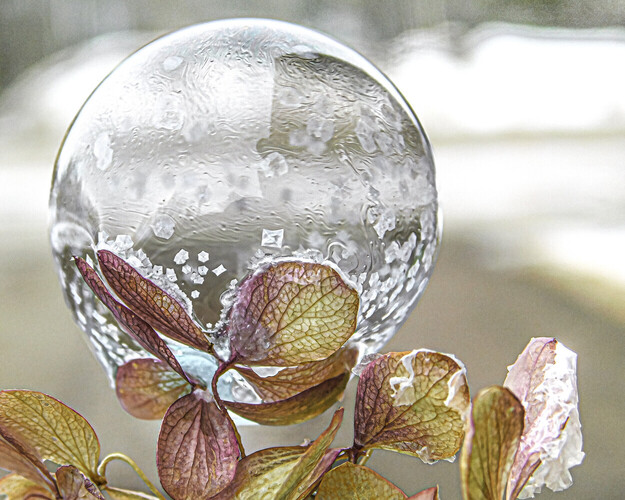
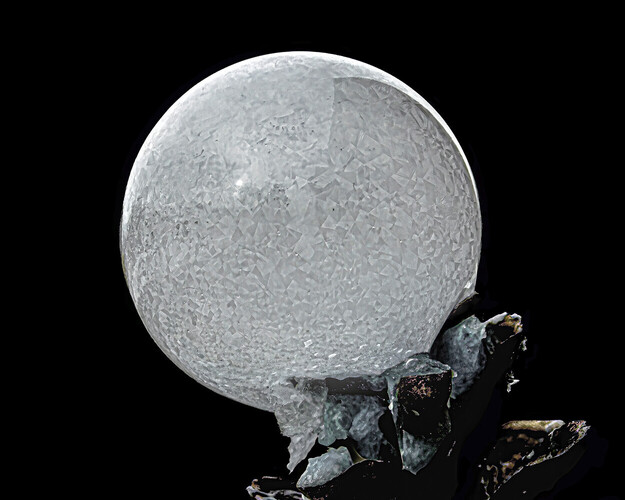
Isabelle is a native of Saint-Quentin, NB. She received her first digital camera in the early 2000s. With the new knowledge she acquired at CCNB in Multimedia Design and Production Management, a taste for digital creation was awakened in her. Gradually, her experiences and learning of new photographic techniques led to her first exhibition, Givre en bulles, in 2014, followed by Papillusion in 2016 and her latest exhibition, Essence d'une communauté, created during a residency in 2018. Most recently, she is exhibiting a series of 18 contemplative landscape photographs.
Winner of several provincial and national photography competitions, she also received an “Associateship Honour” award from CAPA (Canadian Association Photographic Art). Isabelle is a member in good standing of Moncton's Focus Camera Club, and is now a national-level judge for CAPA and various Atlantic photography clubs.
But Isabelle still loves, and probably always will, photographing wildlife and nature, which is her passion and an inexhaustible subject for her.
Residency Project
I like to work with teachers to find an educational theme with which I can adapt my work to theirs.
There are 2 potential projects.
- Macrophotography is very interesting for educational projects. It reveals details that are difficult to see with the naked eye, and sometimes even invisible.
Usually, I prepare a twenty-minute presentation to show all the different options of photography and macro photography in pictures. I'll also present the camera settings, where they are located on the camera and how to use them for the different subjects to be photographed.
Each student will learn how to use the camera and a macro lens. They'll discover how magical macro photography is, and that more often than not, the result is rather abstract. They'll also learn how a tripod is an essential element in the success of a great photo.
- Landscape photography is very versatile: day, night, city, country... and so on.
I usually prepare a twenty-minute presentation to demonstrate all the different options in photography and landscape photography.
Each student will learn how to use the camera and the appropriate lens for landscape photos, the use of filters and how a tripod is an essential element in the success of a great photo. In addition, students will discover how to find the best foreground, background, focus point, avoid distractions and which aperture best applies to the desired final image.
I'll prepare a cheat sheet for the camera settings according to the chosen theme and depending on the light. “Just as photography is drawn with light. This is the essential element!
If the school doesn't have access to good cameras, I'll bring one or two of my own, so the students can work with better equipment, and by encouraging teamwork they'll develop a good understanding of how to use it, and the results will be better.
Also, if possible, we'll do a little photo retouching using Adobe Lightroom.
At the end of the project, we'll print each student's favorite photograph, which I hope will be displayed around the school.
Teaching Experience
I worked for several years as a daycare worker, and as a teacher's aide at school. I also come from a family of teachers.
I've had the opportunity to do a few photo projects in elementary schools.
The macro-photography technique was mostly used. Letters and colors were used to pursue the teacher's themes. Another project involved photographing frosted soap bubbles in winter.
A cooperative approach would be adopted with the help of the teacher. Using the cheat sheet, we'd try to create a well-lit photo, with good focus, and a background suitable for macro or landscape photography. The photograph will appear on my MacBook pro, and with feedback from the other students, we'll adjust the settings.
A demonstration will be necessary at the start of each section to ensure that students are on the same wavelength and ready to tackle the project.